ForeFire
The open-source fire-spread simulator built by CNRS / Université de Corse.
Contributor — Dockerization, CMake build, documentation
Maintainer — CI/CD, reviewing and merging PRs, cutting releases
Co-author on the project's Journal of Open Source Software paper
Where the fire
goes next
ForeFire simulates how a wildfire front moves, using real wind, terrain, and fuel data. Researchers and operational teams use it to run "what if" scenarios: where does this fire go in the next six hours if the wind shifts.
At Pantera, it's the same simulator behind our own spread forecasts — turning a confirmed detection into a projected path a brigade can act on.
Fire makes
its own weather
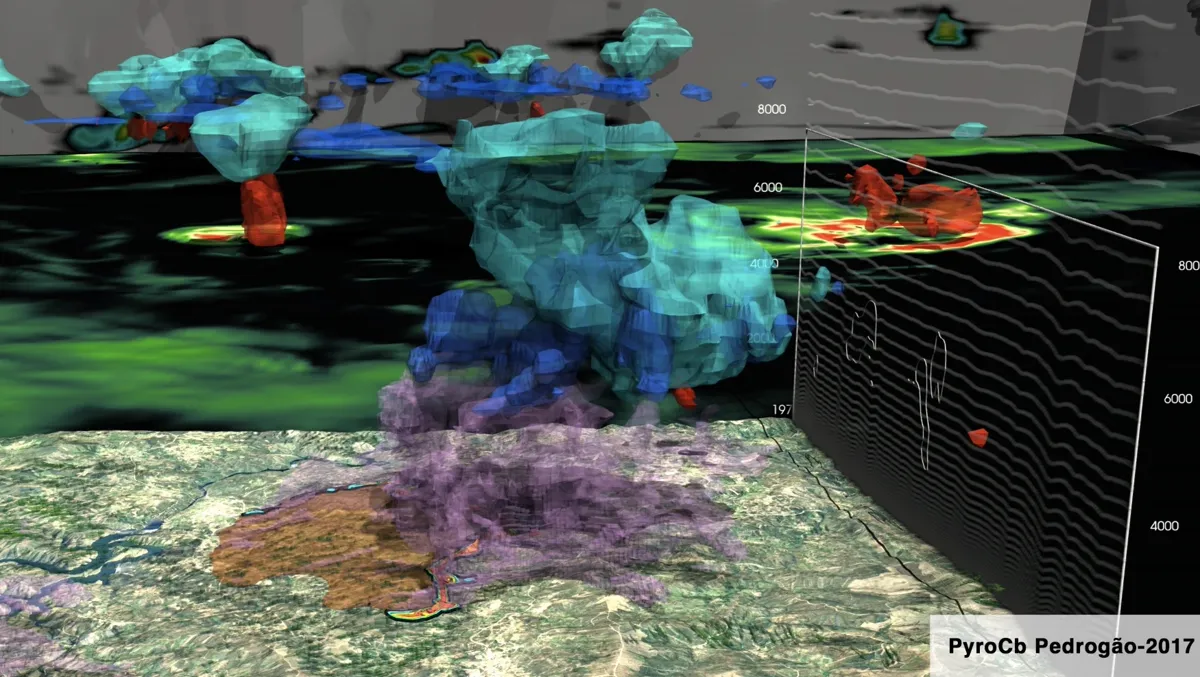
A 3D volumetric rendering of the pyroconvective plume and downbursts generated by ForeFire's coupled fire-atmosphere model, simulating the 2017 Pedrógão Grande wildfire in Portugal.
Figure 2 of the project's JOSS paper.
Layers in,
fire fronts out
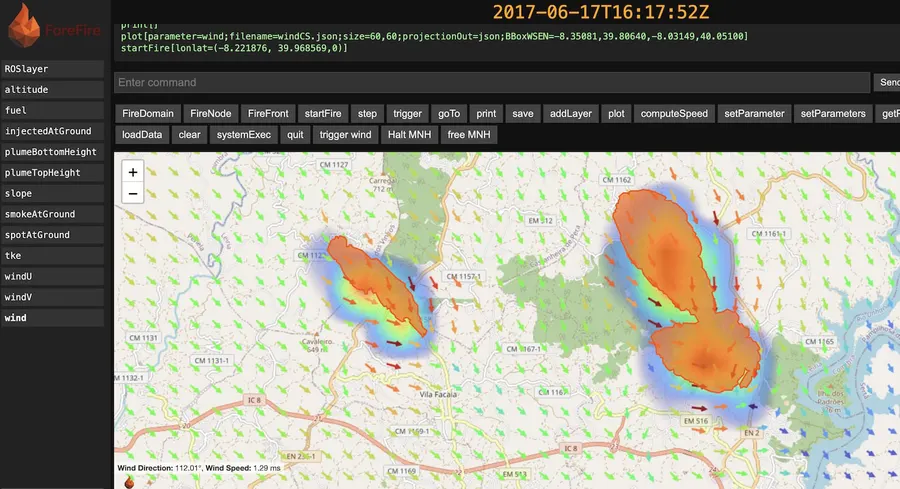
ForeFire's own interface: input layers such as wind, fuel, slope, and altitude on the left, a command bar on top, and simulated fire fronts drawn over the map with the wind field as arrows.
Open source
The simulator is built by CNRS / Université de Corse. My part is keeping it buildable, reproducible, and documented.
- Since 2022
Contributor — Dockerization, moving the build to CMake, documentation and tutorials.
- Since 2025
Maintainer — CI/CD pipeline, Sphinx documentation, reviewing and merging PRs, cutting releases, and the day-to-day of keeping the project buildable and reproducible.
- JOSS paper
Co-author on the project's Journal of Open Source Software paper, the formal citation for the simulator.
Get in touch
If you're building something in fire simulation, wildfire, or scientific open-source tooling, write to me.